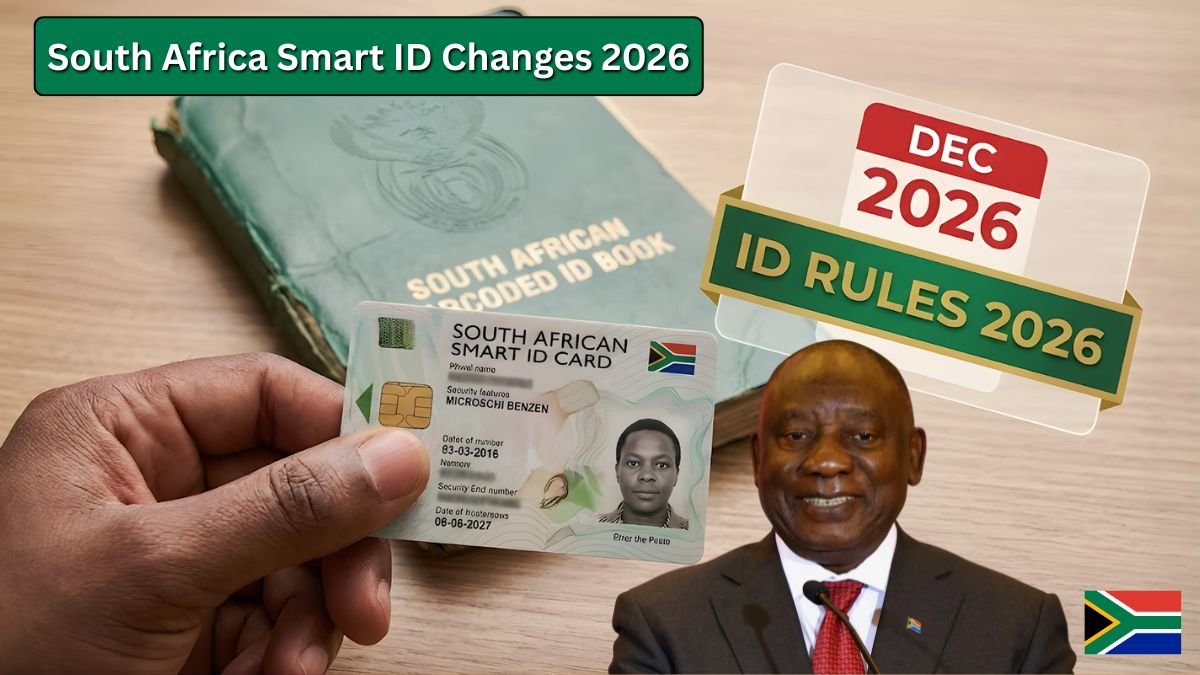
KEY HIGHLIGHTS
- South Africa is rolling out a stricter, digital-first Smart ID process before 2026
- Green ID books are being quietly pushed out across banks and government services
- Delaying your Smart ID upgrade could mean queues, rejections, and service blocks
If you’ve ever stood in a Home Affairs queue watching the clock tick toward closing time, this one hits close to home.
South Africa’s Smart ID process is changing fast, and by 2026, the old way of doing things will no longer cut it. Less paperwork chaos, tighter security, and more pressure to finally ditch the green ID book.
South Africa Smart ID Changes 2026
| Area | Old System | New Smart ID Process (2025–2026) |
|---|---|---|
| Applications | Mostly walk-in | Mostly online with booking |
| Processing time | Weeks or months | Faster, automated checks |
| Security | Basic biometrics | Advanced fingerprints & facial scans |
| Green ID book | Still accepted | Being phased out |
| Rural access | Limited | Mobile Home Affairs units |
Why the 2026 Smart ID Shift Actually Matters
Here’s the thing. Your ID isn’t just a card anymore.
 Join WhatsApp
It decides whether you can open a bank account, apply for a job, travel, or access SASSA and other services. When the system breaks, people get stuck — financially and emotionally.
That’s why these updated Smart ID rules are coming in hard. Fraud, delays, and outdated manual systems have cost ordinary South Africans enough already.
Once this system is fully live, ignoring it won’t be an option.
Digital-First Smart ID Applications Are Taking Over
This is the biggest shift.
From 2025 onwards, most Smart ID applications will start online.
You’ll be expected to:
- Complete applications digitally
- Upload documents from home
- Track progress online
- Book appointments before visiting Home Affairs
Walk-ins? Those are becoming limited. Many offices won’t help you without a booking.

The upside is shorter queues. The downside? If you wait too long, you might not get a slot at all.
Stronger Biometric Security Is Coming
Identity fraud has wrecked lives in this country.
Bank accounts frozen. Loans taken out in someone else’s name. Endless admin trying to fix it.
The new Smart ID system focuses heavily on better biometric checks:
- Improved fingerprint scanning
- More accurate facial recognition
- Stronger matching between your face and official records
Yes, the process might feel stricter. But this time, it’s meant to protect you — not frustrate you.
Faster Smart ID Processing Times (Finally)
Waiting months for an ID has been a national headache.
The good news? Processing times are expected to drop.
Why?
- Manual checks are being replaced by digital verification
- Applications move through automated systems
- Staff pressure at Home Affairs is reduced
Timelines will still vary, but for most people, results should come quicker than before. About time.
Documents Will Be Checked More Closely
This is where many people get caught.

Home Affairs will scrutinise:
- Birth records
- Name and surname spellings
- Household details
- Any corrections or replacements
Even small mismatches can cause delays.
Before applying, double-check everything. Spelling errors, wrong dates, outdated surnames — fix them first. A little prep now can save weeks of frustration later.
The Green ID Book Is Being Phased Out
If you’re still using the green barcoded ID book, this is your warning.
Banks, employers, and government departments are slowly stopping acceptance. The Smart ID card is becoming the default.
Waiting until you’re rejected at a bank or job interview? Yoh, that’s risky.
Upgrading early gives you control — and peace of mind.
Better Access for Rural and Remote Areas
Not everyone lives close to a Home Affairs office. The government is finally acknowledging that.
Mobile Home Affairs units are being rolled out to rural areas in 2025. These units will:
- Process Smart ID applications
- Handle renewals
- Provide temporary identification services
It’s not perfect, but it’s progress — and long overdue.

Who Needs to Act Before 2026?
You should start preparing now if:
- You’re applying for a Smart ID for the first time
- Your ID was lost or stolen
- You’re updating personal details
- You still use the green ID book
As deadlines get closer, demand will spike. Waiting could cost you when you least expect it.
What You Should Do Right Now
Set up or update your Home Affairs online profile.
Scan and organise your documents. Check every detail carefully. Practice booking appointments online.
Doing this now puts you ahead of the rush — and saves you serious stress later.
Frequently Asked Questions
Is the green ID book still valid in South Africa?
Technically, yes, but acceptance is shrinking fast. Many banks and employers now prefer or require the Smart ID card.
Can I apply for a Smart ID without going to Home Affairs?
You can start the process online, but biometric capture still requires a visit, with a booked appointment.
Will Smart ID applications cost more?
Fees remain low, but delays from incorrect documents can cost you time, travel, and missed opportunities.
