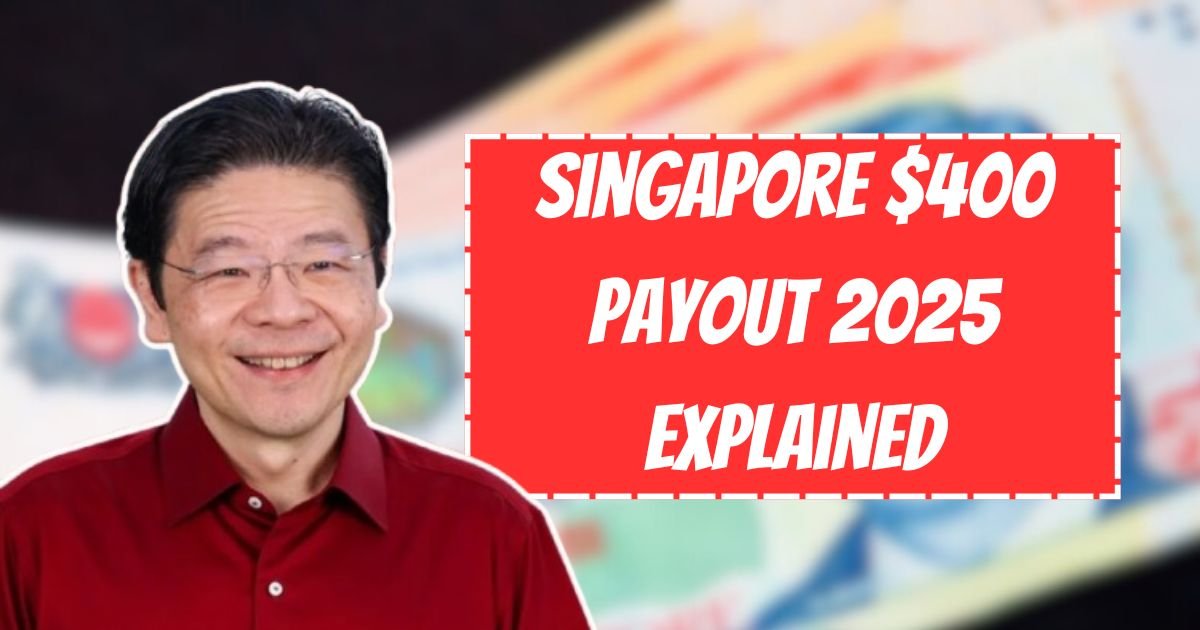
Think about it: you are dealing with skyrocketing grocery bills, utility spikes, and unexpected medical costs while the global economy is constantly changing and making your life harder. This scenario was the case for millions Singaporeans at the beginning of 2025, but the government came to the rescue just in time with a cash payout of $400. This measure was part of the 2025 budget and is not only a relief but also a flexible and wise way to help reclaim one’s life during the struggle with inflation. The government, drawing from the GST Voucher and Assurance Package, aims at the most affected people, showing Singapore’s talent for proactive support. The dispersal has been gradually coming to an end by December 2025, but many have already noticed a difference.
Unpacking the Payout: What It Covers
By this move, the government directs its attention to the skyrocketing prices of basic needs. The price of food has risen by 5% this year alone, transport rates went up a bit, and utilities went up as a result of the volatile energy market. The $400—100% for the lower-income group—places the power in the hands of the recipients: whether to load the refrigerator, fill the transport cards, or keep the money for medical care. Even though it’s a one-time payment, it is highly effective, being a part of a $10 billion package that includes CDC vouchers and MediSave boosts for seniors, among others. Unlike cash-strapped subsidies, cash gives freedom to make choices, which will result in building financial resilience in an expensive city.

Who Gets The Boost? Eligibility Essentials
The eligibility criteria are clear but quite selective. To qualify, you must be a Singapore Citizen who is at least 21 years old as of December 31, 2025, and a resident of Singapore meeting the income-property criteria. Those in the lowest income bracket (assessable income under $34,000, homes valued up to $21,000 annually) will receive the full amount of $400. Middle-income households, with incomes between $34,001 and $100,000 or homes valued at $21,001 to $31,000 will receive an amount between $200 and $300. Private property owners or high earners often miss out, ensuring that the least fortunate receive the aid. Permanent residents? Not an option—only citizens. It is likely that if you are the recipient of GST Vouchers, you are in.
 Join WhatsApp
| Household Type | Income Range (Assessable) | Home Annual Value | Payout Amount |
|---|---|---|---|
| Lower-Income | Up to $34,000 | Up to $21,000 | $400 |
| Middle-Income | $34,001–$100,000 | $21,001–$31,000 | $200–$300 |
| Higher-Income | Over $100,000 | Over $31,000 | $0 |
Timeline And How It Hits Your Pocket
The distribution of the funds started in the first half of the year, reaching its peak in the second week of August for most of the people. By now, more than 80% of the eligible accounts have funds credited via PayNow (using NRIC), GIRO, or bank transfers. Are you a latecomer? Check Singpass for your status—the updates are sent via SMS. There are scams around, so it is advisable to deal only with gov.sg; false links that claim “instant claims” are warnings. For people aged 65 and above, there will be bonus top-ups of up to $300 in MediSave along with cash, to be distributed in February 2025.

- Check your eligibility on mygovbenefits.gov.sg.
- If necessary, update your bank account details.
- Look out for December notifications regarding extras.
Beyond The Bucks
This cash payment illustrates the Singaporean government’s changeable welfare system. It removes immediate suffering and at the same time hints at what more to come—like improved U-Save rebates or 2026 cash rounds. Families are saying they spend money on their kids or pay off debt, so they feel they are at the top. However, experts recommend that the use of such cash be accompanied by budgeting apps for lasting benefits. In an uncertain year, it is a convincing reminder that support is not a charity but an investment in collective wealth.