Imagine the scenario where the central government’s more than 50 lakh employees and 69 lakh retirees get to hear the news that their salaries and pensions are to be possibly increased. This vision is gradually coming true with the official formation of the 8th Central Pay Commission at the end of 2025.
The 7th Pay Commission will have finished its work by the end of 2025, and this is when the demand for raising the salaries in light of the financial pressures created by the high cost of living begins to be voiced with the loudest cheers.
Commission Formation and Timeline
The Union Cabinet cleared the way for forming the 8th Pay Commission by approving the Terms of Reference (ToR). On November 3, 2025, the Ministry of Finance officially announced them.
 Join WhatsApp
The commission has a time frame of 18 months in which to produce its report, which would make it around mid-2027. One of the conditions is that it can submit interim reports if needed.
The panel will be based in Delhi and will consider the economic conditions and fiscal constraints while conducting its review of the salaries, allowances, pensions, and other benefits.
Who Benefits from the Changes?
A revision as large as this one benefits an entire population of workers. Some major names are:

- More than 50 lakh central government employees serving at present.
- Nearly 69 lakh individuals receiving pensions.
The ToR has given special mention to pension revisions, thereby securing the reassurance of retirees despite initial concerns.
Other than the defense staff, All India Services, and other central government employees are included too.
Expected Salary and Pension Revisions
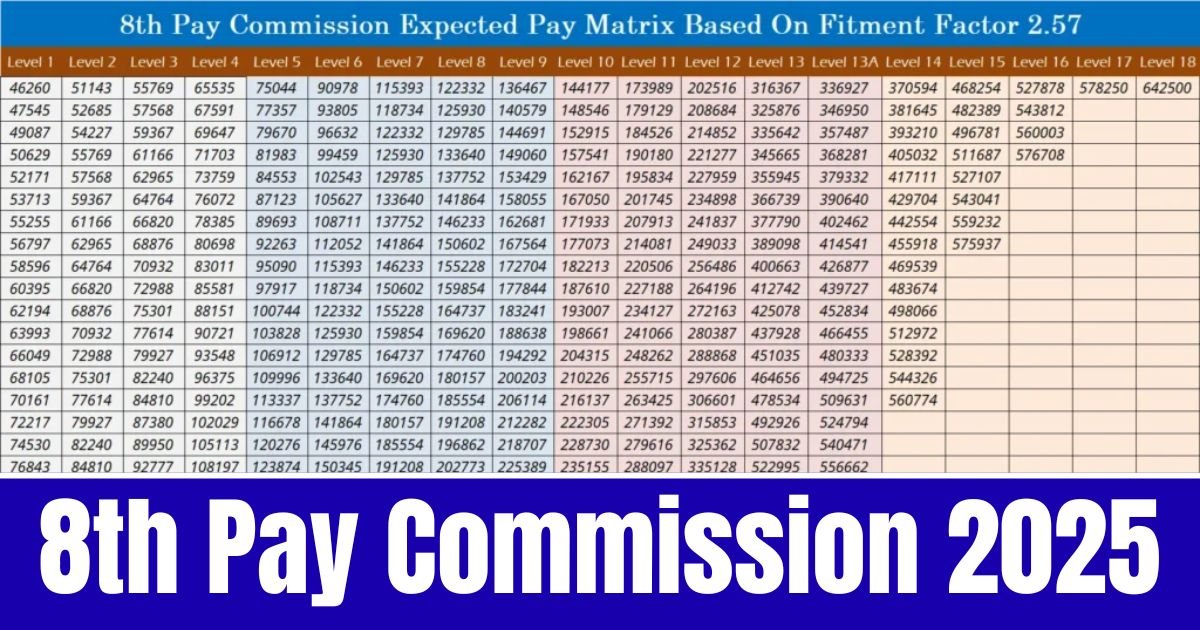
There is no official fitment factor yet. Analysts are betting on hikes of 20-35% depending on the eventual recommendations.
Going by the past practice of commissions, the implementations would have been backdated, which is why the employees are hoping for getting paid their dues from January 1, 2026.
The government says the date will be decided later, after which allocation of funds will take place based on approval.
Comparison of Past Pay Commissions
For better understanding, the following table provides a brief overview of previous revisions:

| Pay Commission | Implementation Year | Fitment Factor | Minimum Basic Pay (Approx.) | Key Notes |
|---|---|---|---|---|
| 6th | 2006 | 1.86 | ₹7,000 | Backdated arrears common |
| 7th | 2016 | 2.57 | ₹18,000 | 23.55% overall hike |
| 8th (Expected) | 2026+ | TBD (rumors 2.0-3.0) | TBD (possibly ₹35,000+) | Focus on inflation, pensions |
The past trend indicates that there is a delay in the rollout but often includes backdated benefits at the same time.
Arrears and Implementation Uncertainty
A big question mark looms over the question: Will the new pay scales be as effective as of January 1, 2026 with back wages?
According to the updates from Parliament, the government will determine the timing after it has received and reviewed the report.
The previous commissions—the 6th and the 7th—granted the employees back-dated payments though the process was slow.
Impact on Allowances and Dearness Relief
The commission will look into the different areas such as Dearness Allowances(DA), House Rent Allowances (HRA) and other benefits as well.
For the time being, the merger of DA with the basic salary is not going to happen.

As has been the practice, once the new salary is implemented the DA would be brought down to zero on the new basic pay.
What Employees and Pensioners Can Expect Next
Interactions with the different parties concerned are in progress. The commission may bring in experts to their assistance.
The ultimate recommendations might include not only performance-linked incentives and health schemes but also the resting on employees’ past work.
Once the changes have been made, not only will it take the form of financial security but will also be the case for millions of individuals.
