For years, parents have whispered the same fear: “I can’t keep up with what my child sees online.”
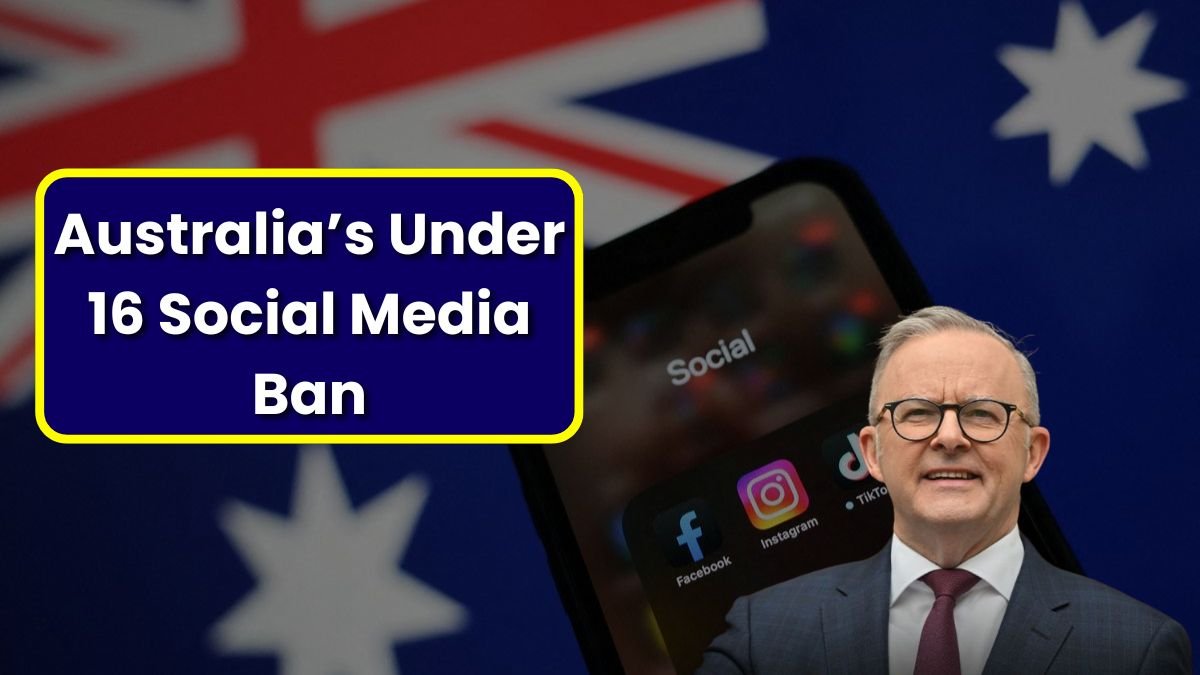
Australia has now answered that fear with one of the world’s toughest decisions — a nationwide ban on social media accounts for anyone under 16. And starting next month, it becomes real.
Here’s the thing… whether you see this as protection or overreach, the ripple effects won’t stay inside Australia’s borders.
Why Australia Drew the Line at Age 16
Let’s break it down.
The new Child and Youth Social Network Prohibition Act kicks in next month, shutting the door on under-16 access to platforms like Instagram, Facebook, TikTok, Snapchat, YouTube, Reddit, X, and more.
 Join WhatsApp
Why such a hard cutoff?
Because the past few years have been brutal.
Rising cases of online grooming, harassment, bullying, and deepfake abuse pushed the public to a breaking point. Some teens made tragic choices after being targeted online — and Australians demanded action.
A poll by YouGov found 77% of Australians support the ban, which tells you something about how shaken the country is.

The law’s message is blunt:
“Kids can’t fight the power of social media — so we’ll do it for them.”
How Platforms Are Locking Out Under-16 Users
Companies aren’t taking chances. The penalties are enormous — fines up to $32 million (₩47.1 billion) per violation.
So platforms are rolling out strict verification systems:
- Bank-linked age checks
- Government ID uploads
- Selfie-based age estimation
- AI inference from friend lists and browsing patterns
Snapchat, for example, will require Australian users to prove their age using one of these methods. Meta will start deleting under-16 accounts automatically.
The Debate: Safety vs Freedom
Of course, not everyone is cheering.
Digital rights advocates argue the ban crosses into privacy invasion and a child’s right to free political expression, which is protected under Australia’s implied constitutional rights.

Two 15-year-olds — Noah Jones and Macy Neyland — have filed a High Court challenge, calling the law “lazy,” “disproportionate,” and “a punishment for growing up online.”
And they have a point:
Kids today are digital natives. For many, online spaces are where they learn, create, and belong.
Some psychologists warn that cutting them off entirely may push them into unregulated underground forums — far more dangerous than mainstream social media.
Why Tech Companies Are Nervous
Here’s what nobody says aloud:
This isn’t just an Australian issue. It’s a global trend.
- Malaysia has approved its own under-16 social media ban.
- Denmark is reviewing similar legislation.
- New Zealand has a proposal on the table.
If this spreads, platforms like Meta, YouTube, and TikTok could lose millions of young users — and billions in revenue.
No wonder companies are worried. YouTube even pushed for an exemption, warning that the ban could silence under-16 voices in political discussions. That plea was rejected.

What This Means for the Future of the Internet
Whether you agree with the law or not, one truth is unavoidable:
Australia has fired the first shot in a new global battle — who decides when kids are ready for the internet?
Parents?
Governments?
Platforms?
Or the teens themselves?
Frequently Asked Questions
1. Can Australian teens under 16 still use social media with parental consent?
No. The ban applies regardless of parental permission. Platforms must deny access or face multi-million-dollar penalties.
2. Will teens be punished if they break the rule?
No. Young users face no legal consequences. The liability falls entirely on social media companies.
3. Could other countries adopt similar age restrictions?
Yes. Malaysia, Denmark, and New Zealand are already considering or drafting similar legislation, and more nations may follow Australia’s model.
